

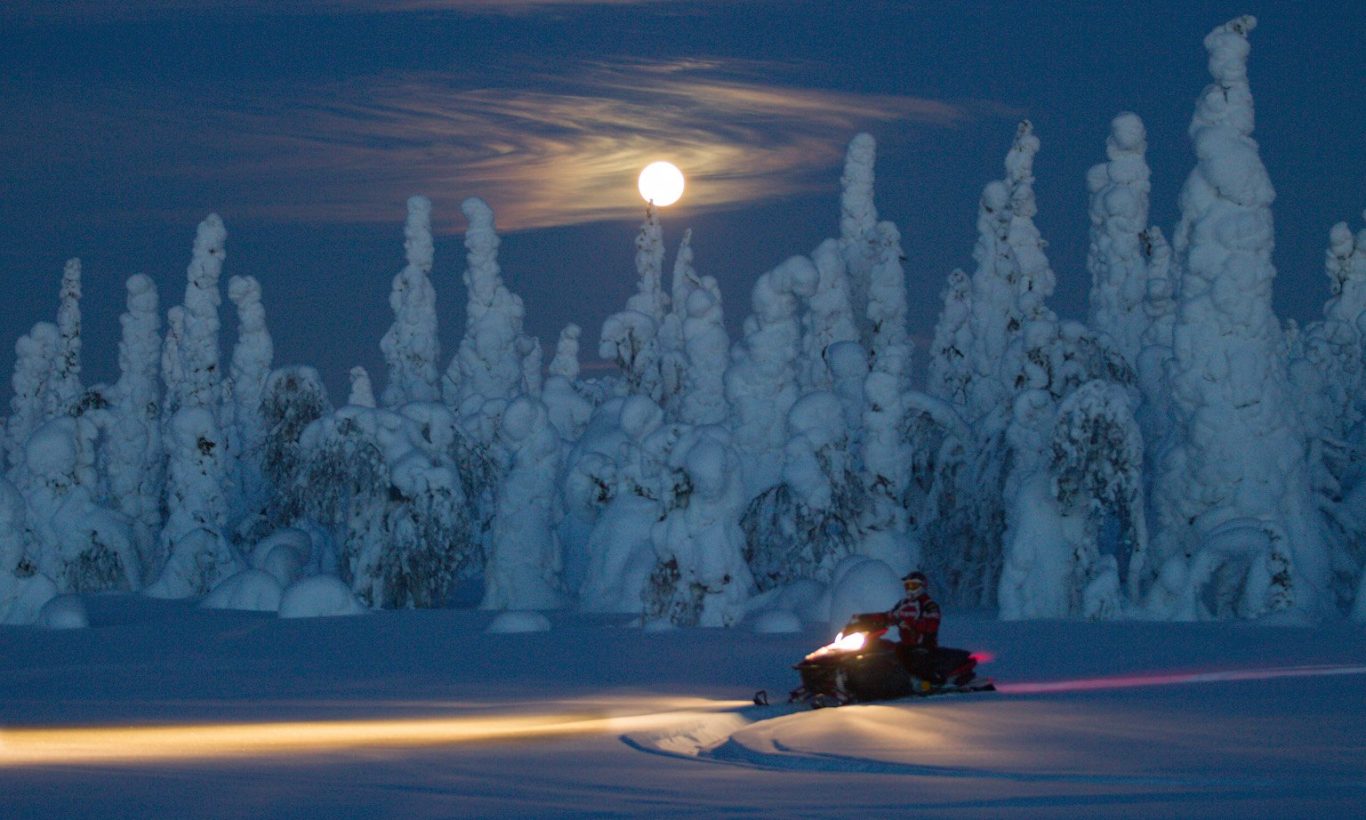

Driving in Lapland in winter is calm but demanding
Driving in Lapland in winter often means quiet roads, long distances, packed snow and limited daylight. A well-equipped car makes the journey manageable, but the driver must adapt speed and spacing to conditions. Plan extra time and never treat the navigation app’s estimate as a deadline.
Before setting out
Use a vehicle with tyres suitable for the prevailing winter conditions and learn its controls before leaving the rental area. Clear all windows, mirrors, lights and the roof of snow. Check fuel or battery range, washer fluid, phone charge and the route. Fintraffic’s Traffic Situation service provides road-weather warnings, driving conditions and camera images; check it while parked, not while driving.
Keep warm clothing, a blanket, water and snacks in the car. On a remote route, refuel earlier than you would in a city. Tell someone your expected arrival if the weather is severe.
How to drive on snow and ice
Accelerate, steer and brake smoothly. Leave a much longer distance to the vehicle ahead and begin slowing early. Cruise control may be unsuitable on slippery surfaces because the driver needs direct, gentle control. Use full headlights as required, keep them clean and expect visibility to fall quickly in blowing snow.
If the car begins to skid, look toward the safe path, ease off abrupt inputs and follow the vehicle manufacturer’s guidance. Avoid sudden braking or aggressive steering. If you lack winter-driving experience, consider a transfer or ask the rental company about familiarisation.
Reindeer on the road
Reindeer may stand, walk or suddenly turn on the carriageway. Reduce speed immediately when you see one; more animals may follow. Do not sound the horn aggressively or try to squeeze through a herd. Wait until the road is clearly open. Be especially alert around dawn, dusk and areas marked with warning signs.
If a collision occurs, stop safely, warn other traffic and call Finland’s emergency number 112 when there is danger, injury or an animal collision requiring assistance. Follow the operator’s instructions and do not approach an injured animal.
Darkness, fatigue and narrow roads
Kaamos-season drives can remain dim for most of the day. Take breaks before you feel tired, avoid staring into oncoming headlights and clean the windscreen frequently. Smaller roads may have snow banks, narrow shoulders and slower maintenance than main routes. Give snowploughs space and never overtake unless visibility and road markings make it unquestionably safe and legal.
Arriving at Kelo Resort
Check comment rejoindre le Kelo Resort before departure and use the exact address in navigation. Confirm winter arrival instructions, particularly after dark. The safest Lapland road trip is a patient one: adapt to the surface, keep generous margins and let the landscape set the pace.