

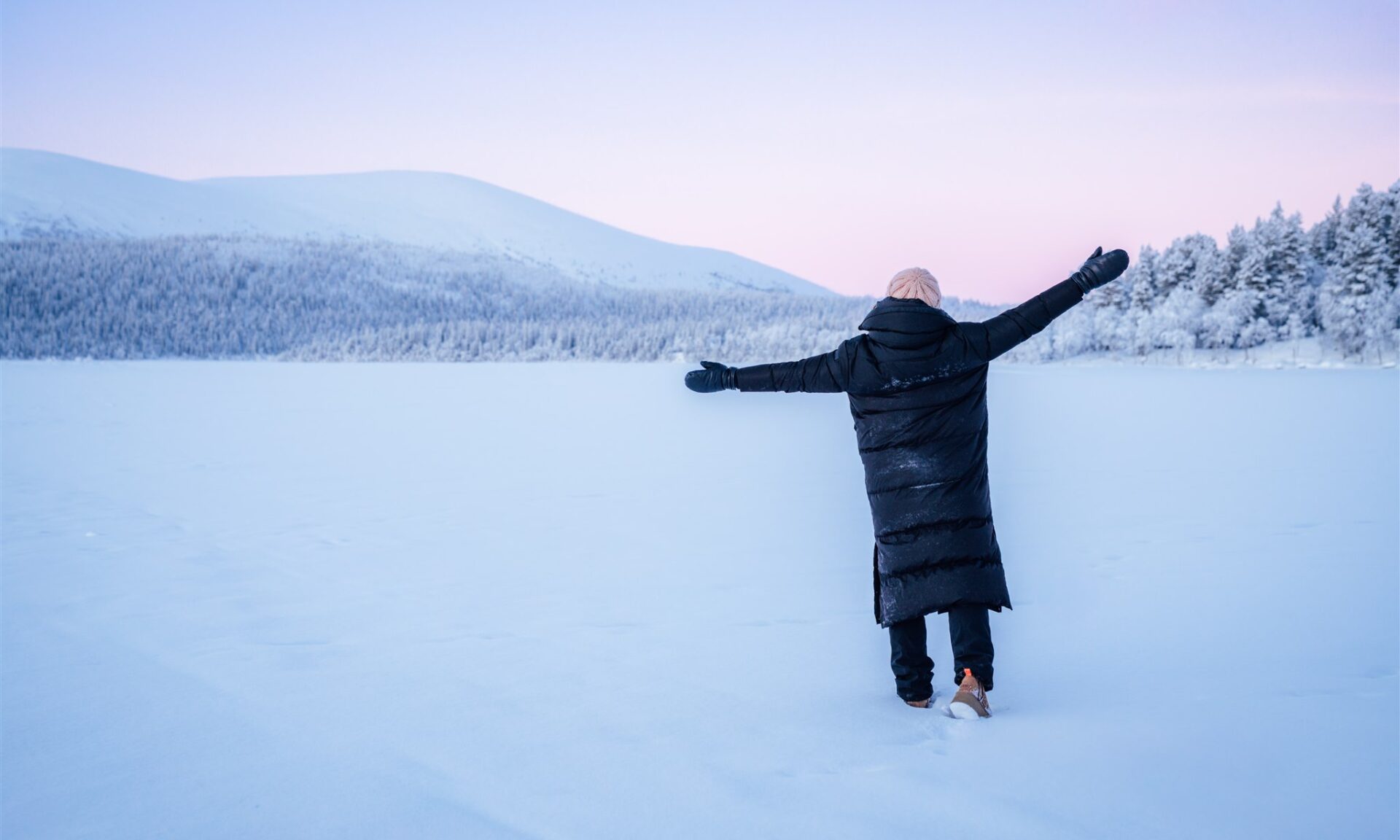

What to pack for Lapland: plan for layers, not luggage volume
The best answer to what to pack for Lapland is a small, versatile wardrobe built around layers. You need warm clothing, reliable footwear and a few Arctic-specific accessories, but you do not need a different outfit for every day. Confirm what your accommodation and tour operators provide, then pack the gaps.
Essential winter clothing checklist
- Two thermal base-layer sets in merino wool or technical fabric
- Two or three wool, fleece or insulated mid-layers
- A windproof insulated winter jacket
- Insulated or weather-resistant winter trousers
- Several pairs of wool or technical socks
- Insulated winter boots with thick, grippy soles
- Warm hat that covers the ears
- Neck gaiter or balaclava
- Thin liner gloves and insulated mittens
- Indoor clothing and comfortable shoes
- Sleepwear, underwear and swimwear
Choose pieces that work together. Two base sets allow one to dry while the other is in use. Mid-layers can be repeated, and outerwear rarely needs changing during a short trip.
Small accessories that make a large difference
Pack a reflector or reflective strap for dark roads and paths. Sunglasses and sunscreen are important when spring snow reflects strong light. Lip balm and a fragrance-free moisturiser help in cold, dry air. Reusable hand warmers can improve long waits outdoors, but they should never replace proper gloves.
A small daypack should hold a spare mid-layer, dry gloves and socks, water, snacks, tissues and any personal medicine. Add an insulated bottle or thermos if you will spend hours outside. Keep liquids where they will not freeze solid.
Camera and phone equipment in Arctic cold
Cold shortens battery life. Bring a power bank, spare camera batteries and charging cables, and carry batteries in an inside pocket. Move cameras between cold and warm air carefully: placing equipment in a closed bag before entering a warm building helps reduce condensation. A head torch is useful, but use a dim or red mode around aurora photographers.
Download maps, booking details and emergency information before leaving reliable coverage. Northern Finland has good connections in many populated areas, yet remote routes can have gaps. A paper note with your accommodation address and contact details is a simple backup.
Documents, money and driving items
Bring valid travel documents, a driving licence if needed, insurance details and payment cards. Keep digital copies securely accessible. If renting a car, confirm the vehicle, winter equipment, fuel policy and roadside assistance. A phone charger for the car, ice scraper, snow brush, warm blanket, water and snacks belong on longer winter drives; many rental vehicles provide some of these, but check before departure.
Medicines and personal care
Carry enough prescription medication for the trip plus a small reserve, in original packaging when possible. Pack any documentation required for international travel. Useful basics include plasters, pain relief, personal allergy medication and blister care. Do not depend on a remote village shop for a specific brand or prescription.
Cold air may make contact lenses and eyes feel dry, so bring glasses as a backup. Avoid water-based cosmetics immediately before long exposure to severe cold, and apply moisturiser well before going outside.
Packing for children
Children need more spares than adults: at least two pairs of mittens, extra socks, a dry balaclava and backup base layers. Pack familiar snacks, a compact activity for transfers and any child-specific medicine. A lightweight sled may be available locally, so ask before transporting bulky equipment.
For babies and toddlers, confirm cot, high chair, bedding and transport arrangements with the accommodation. Never assume that a thick snowsuit is safe under a car-seat harness; follow the seat’s instructions and use a blanket over correctly tightened straps if recommended.
What activity providers may supply
Guided Arctic activities often include specialist outer clothing and equipment. At Kelo Resort, several winter experiences provide thermal overalls, boots, woollen socks and mittens. Equipment such as helmets, snowshoes, fishing tackle or bikes is supplied for the relevant tour. Read the exact activity description, give accurate sizes and still wear your own moisture-managing base layer.
Browse Kelo Resort activities before finalising your suitcase. If warm outerwear is included on most booked days, you may be able to travel lighter; you still need suitable clothing for independent time outdoors.
A seven-day Lapland winter capsule wardrobe
For a one-week trip, two base-layer sets, two substantial mid-layers, one light insulating jacket and one winter outer set are usually sufficient. Add five to seven pairs of underwear, three or four pairs of wool socks, indoor trousers, two casual tops and one comfortable dinner outfit. Choose colours and shapes that mix easily rather than packing complete daily outfits.
On day one, wear base set A and air it overnight. Use set B the next day, then repeat according to freshness and activity. Merino can often be aired rather than washed after ordinary use. If a layer becomes sweaty during strenuous exercise, wash or rinse it according to the care label and allow it to dry fully. Confirm whether laundry or a drying cabinet is available at the accommodation.
One pair of true winter boots is more valuable than several ordinary shoes. Pack lightweight indoor footwear for the room or restaurant. Wear the bulkiest coat and boots during the transfer if luggage space is limited, but keep airport comfort and security checks in mind.
Packing by type of itinerary
Resort and guided-activity holiday
If most days include organised tours with supplied thermal clothing, focus on good base layers, personal accessories and comfortable indoor clothes. You may not need expedition-grade outerwear, but you still need a safe coat and boots for transfers, independent walks and evenings.
Self-guided active holiday
For independent skiing, snowshoeing or winter hiking, pack more breathable pieces, a larger daypack, navigation backup, personal first aid, spare batteries and activity-specific safety equipment. Verify routes and rental gear instead of assuming that summer trails are usable in winter.
Photography and Northern Lights trip
Stationary nights demand maximum insulation. Add an extra down or synthetic jacket, insulated trousers, mitten shells, hand warmers, tripod, spare batteries and a dim head torch. Use a bag large enough to let camera equipment acclimatise gradually when moving indoors.
Autumn or shoulder-season trip
For September, October or May, waterproofing becomes as important as insulation. Pack a rain shell, waterproof footwear, gaiters if hiking, quick-drying trousers and layers that handle both frost and mild afternoons. Check which services are open between seasons.
Food, water and special dietary needs
Do not carry an entire pantry, but bring a few reliable travel snacks for long transfers and late arrivals. Tell the accommodation and activity provider about allergies and dietary requirements in advance. Remote shops may have shorter hours and a smaller selection than urban supermarkets.
A reusable bottle is useful indoors and on short outings. In severe cold, an insulated bottle is more reliable; narrow exposed tubes and hydration bladders can freeze. Do not eat unknown wild plants, berries or mushrooms without certain identification, and never assume untreated natural water is safe in every location and season.
Barrierefreiheit und persönliche Ausrüstung
Wenn Sie Mobilitätshilfen, medizinische Geräte, ein CPAP-Gerät oder temperaturempfindliche Medikamente verwenden, besprechen Sie vor der Reise den Transport, die Ladung, den Speicher und die Kühlleistung. Eis und gefrorener Schnee können die Zugänglichkeit verändern, auch wenn ein Innenbereich barrierefrei ist. Ersatzbatterien, Schutzhüllen und eine schriftliche Ausrüstungsliste helfen, falls die Gepäckstücke länger auf dem Weg bleiben.
Fragen Sie nach den genauen Abmessungen und den Details der Oberfläche, anstatt sich nur auf das Wort “zugänglich” zu verlassen. Bestätigen Sie die Zugangsmöglichkeiten in das Schlafzimmer, das Badezimmer, das Restaurant und die Aufzüge und erklären Sie, welche Unterstützung Sie benötigen. Die frühzeitige Planung dieser Details bietet Ihnen mehr Freiheit, sobald Sie ankommen.
Nachhaltige Verpackungsmöglichkeiten
Das Ausleihen, Mieten und Wiederverwenden sind oft besser als das Kauf einer kompletten Arktis-Kollektion für einen einzigen Urlaub. Wählen Sie langlebige, wiederbefüllbare Behälter, vermeiden Sie Einwegwärmeflaschen, wenn eine wiederverwendbare Option verfügbar ist, und entfernen Sie vor der Reise unnötige Verpackungen. Bringen Sie eine kleine Tasche mit, um Müll aus der Natur zu transportieren.
Waschen Sie Kleidung oder sich selbst nicht direkt in Seen und Bächen. Nutzen Sie die Einrichtungen der Unterkunft und folgen Sie der lokalen Abfalltrennung. Die nachhaltigste Reisekoffer ist nicht unbedingt der kleinste; er ist derjenige, der Sie sicher hält, ohne Einweg- oder überflüssige Ausrüstung.
Was man nicht mitnehmen sollte
Vergessen Sie glatte Modeschuhe mit flachem Absatz, eine ganze Garderobe aus Baumwoll-Hoodies und zu viele formelle Ankleider. Vermeiden Sie es, Ihr Gepäck mit sperrigen, doppelt genutzten Jacken zu überladen, bevor Sie Mietkleidung oder Tourkleidung prüfen. Tragen Sie kein Drohne mit, ohne vorher die aktuellen Luftfahrtregeln, Schutzgebietsbeschränkungen und lokale Datenschutzbestimmungen zu prüfen. Funkgeräte, brennbare Gegenstände und Spezialausrüstung für den Außenbereich können auch aufgrund von Transport- oder Bestimmungsbestimmungen eingeschränkt sein.
Notwendige Utensilien für eine Winteranreise
Verzögerte Gepäckstücke sind überall unangenehm und in einem arktischen Reiseziel besonders ärgerlich. Tragen Sie im Reiseverkehr Jacke, Hut, Handschuhe und eine warme Zwischenwäsche mit. Packen Sie Medikamente, Dokumente, Ladegeräte und eine Grundwäsche in Handgepäck. Falls Ihr aufgegebenes Gepäck verzögert wird, können Sie den Flughafen dennoch sicher verlassen und den ersten Tag bewältigen.
Endgültige 24-Stunden-Überprüfung
Überprüfen Sie die Reisevorhersage für den Reiseort, nicht nur für “Lapland” als Region. Bestätigen Sie die Transfers, die Öffnungszeiten und die mit den Aktivitäten verbundenen Kleidungsstücke. Laden Sie Ihre Geräte auf, laden Sie Reservierungen herunter und informieren Sie die Unterkunft über eine späte Anreise. Eine sorgfältige Packliste ist nicht nur nützlich, um sich warm zu halten: Sie ermöglicht es Ihnen, sich auf die Stille, den Schnee und das Winterlicht zu konzentrieren, anstatt auf fehlendes Equipment zu denken.
Allgemeine Packungsfragen
Kann ich nach meiner Ankunft Wintersportausrüstung kaufen?
Einige Ferienorte und Städte in Lappland verfügen über Außenläden, die Auswahl und die Öffnungszeiten variieren jedoch. Kommen Sie nicht ohne die für eine sichere Reise vom Flughafen benötigten Kleidungsstücke an. Kauf oder Miete von Spezialausstattungen erfolgt nach Bestätigung der örtlichen Verfügbarkeit.
Brauche ich formelle Kleidung?
Die meisten Restaurants und Hotels in Lappland sind locker-lässig. Eine schicke Strickjacke, saubere Hosen und freie Schuhe sind in der Regel ausreichend. Prüfen Sie nur, ob bei einer besonderen Veranstaltung eine bestimmte Kleiderordnung gilt.
Wie groß sollte mein Koffer sein?
Ein mittelgroßer Koffer plus ein Daypack reicht für viele einwöchige Wintertouren. Kompressionstaschen organisieren weiche Schichten, können aber die Isolierung zerstören; sie ermöglichen es, die Isolierung wieder aufzuwecken, bevor sie verwendet wird.
Kann ich mich auf eine Aktivität als einzige Abdeckung verlassen?
Nein. Bereitgestellte Overallanzüge werden normalerweise während der gebuchten Erfahrung verwendet. Für Anreisen, unabhängige Zeiträume und alle anderen Zeiten, in denen die Mietkleidung nicht verfügbar ist, benötigen Sie weiterhin warme Oberbekleidung.