

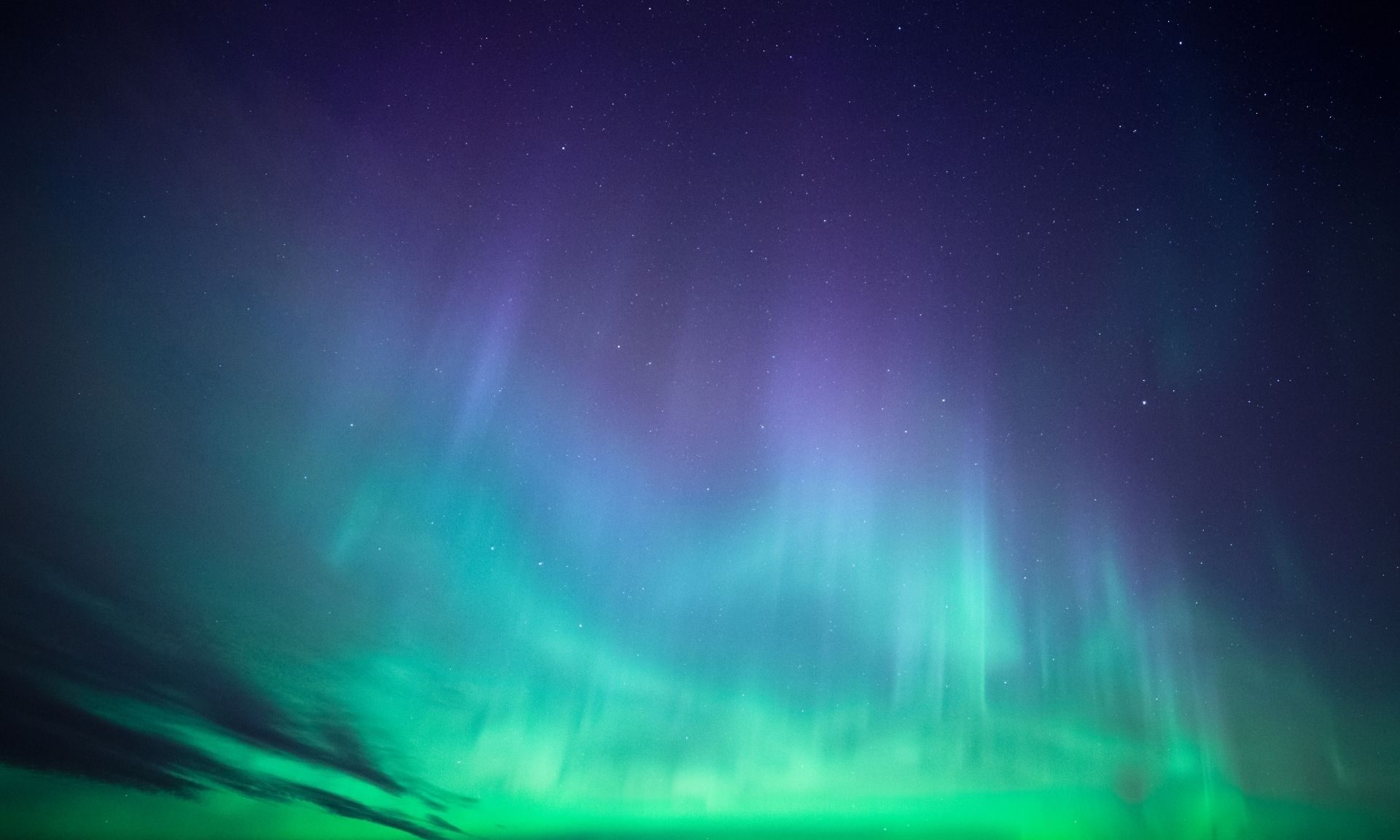

Chasing the aurora borealis in Finland comes down to reading the right signals at the right time. While nothing guarantees a sighting, a reliable northern lights forecast for Finland helps travelers decide when it’s actually worth heading outside.
This guide explains how aurora forecasting works, which tools to use, and how to interpret a forecast for northern lights in Finland so you know when to go outside.
Why Finland Is One of the Best Places to See the Aurora
Finland sits directly beneath the auroral oval, the ring-shaped zone around the magnetic pole where auroras are most frequent. In northern Finland, the Northern Lights appear on roughly 200 nights a year, and with the right timing and location, the chances of catching them are excellent.
Finland is on the southern rim of the auroral oval, and the probability for seeing auroras is best in the northernmost part of the country, in Lapland. Further south, sightings become rarer, though during strong geomagnetic storms the auroral oval expands southward and auroras can be seen also in Central and Southern Finland.
The aurora forms far above the ground. The Northern Lights form at altitudes of over 100 kilometres, when solar winds — streams of charged particles from the sun — collide with the Earth’s atmosphere, and auroras are visible from the ground when the sky is dark and clear, which happens regularly during the aurora season from August through April.
Read How Long Do Northern Lights Last in Reality
Timing Your Trip: The Best Time to See Northern Lights in Finland
Finland’s aurora season runs from late August to early April, the window when nights are dark enough for the lights to be visible. Auroral activity is not evenly distributed throughout that season, though.
Auroras occur throughout the year, but they can only be observed when the sky is dark enough. Their occurrence is slightly more frequent around the spring and autumn equinoxes.
Autumn and spring are statistically the most active periods, thanks to the geometry between Earth and the sun around the equinoxes, though winter remains the most popular season since the darkest nights give the longest viewing windows.
On any given clear night, timing also matters. The best viewing window is typically between 9pm and 2am, and the typical time for auroral displays is around midnight, plus or minus a couple of hours, although auroras can occur randomly whenever the sky is dark enough.
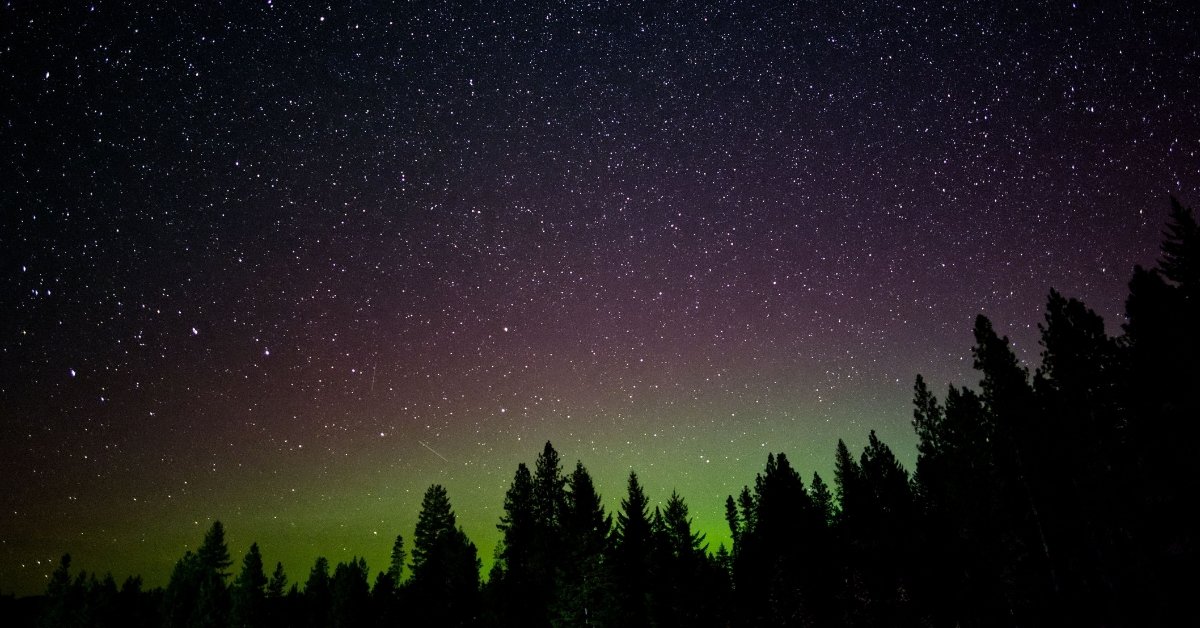
Reading an Aurora Borealis Forecast Finland Style
A genuine aurora borealis forecast in Finland relies on two separate data streams. Many first-time visitors focus only on geomagnetic activity and overlook local cloud conditions — and an accurate Finland aurora forecast, or any solid aurora forecast Finland travelers rely on, needs both.
Space weather (the Kp index and geomagnetic activity). The Kp index Finland forecasters watch measures global geomagnetic disturbance on a scale of 0–9. A KP index of 1 signals very little activity, 5 signals a minor magnetic storm, and 9 signals a very powerful storm; stronger geomagnetic storms cause the auroral oval to expand up to 1,000 kilometres wider, bringing the aurora to lower latitudes.
In northern Lapland, auroras are often visible even when the Kp index is low, since the auroral oval regularly sits directly overhead; further south, stronger Kp values become necessary, and a higher Kp signifies a wider auroral oval, maxing out around local midnight, with a good chance of seeing aurora overhead and further south when the Kp index climbs past 5.
The Finnish Meteorological Institute (FMI) runs its own real-time monitoring network for this purpose. Its space weather service estimates the probability of aurora borealis and geomagnetic disturbances using measurements from automatic magnetometer stations that the FMI maintains, including data from the Sodankylä Geophysical Observatory.
Following this magnetic activity works as a form of nowcasting: once local magnetic activity rises to a high level at the station closest to you, it’s time to go outside and look.
Local weather — specifically cloud cover. Even a severe geomagnetic storm is invisible through overcast skies. Clouds are the most common reason people miss the Northern Lights entirely, so it pays to follow local forecasts closely and be ready to move, since activity can be intense in one spot and invisible just a few kilometres away.
Thin high clouds can also reduce visibility, even when a forecast doesn’t classify the sky as fully overcast. Moon phase plays a secondary role too — a bright full moon can wash out a faint aurora, so nights close to a new moon generally offer better contrast.
Because Kp values alone don’t capture local sky conditions, treat any single number as a starting point rather than a guarantee. As one Lapland-focused forecast service puts it, the aurora forecast, based on planetary Kp-index and cloudiness data, should be used only as a guideline and isn’t reliable enough on its own to serve as a definitive alert mechanism.
In practice, experienced aurora watchers in Finnish Lapland often pay closer attention to local cloud cover and real-time magnetometer readings than to the planetary Kp index alone, especially during periods of moderate solar activity, since local conditions tend to make or break a sighting more often than the headline Kp number does.
The Best Northern Lights Forecast App Options
A dedicated northern lights forecast app combines both data streams — geomagnetic activity and cloud cover — into a single push notification, so you don’t have to check multiple websites at 11pm in freezing temperatures.
- Aurora Alert Realtime — The app delivers a real-time alert on your phone when conditions turn favourable for seeing the Northern Lights, is completely free for personal use, and provides daily aurora and weather forecasts alongside realtime images updated once a minute.It also includes Night Vision and Intelligent Alert features, the latter of which notifies you specifically when aurora intensity is increasing. It’s available on Google Play and the App Store — after installing, simply select your resort or region.
- Northern Lights Alert (NLAlert) — This service bases its alerts on a network of real-time aurora cameras positioned around Finnish Lapland, covering Rovaniemi, Levi, Muonio, Ylläs, Saariselkä, Pyhä, and Ivalo.
- FMI Space Weather — the official Finnish Meteorological Institute service, ideal for checking the underlying geomagnetic data behind any consumer app’s alert.
- NOAA Space Weather Prediction Center (SWPC) — the U.S. agency’s 30-minute aurora forecast is a useful international cross-check on Kp trends before you commit to a night out.
Using two apps together, one for geomagnetic activity, one for camera-verified sightings, can improve your chances, since neither data source alone tells the whole story.
Checking Northern Lights Tonight in Finland: A Quick Routine
Before heading out to look for northern lights tonight Finland, follow this quick checklist:
- Check the Kp index on the FMI space weather page or NOAA’s dashboard. Look for at least Kp 2–3 in Lapland, higher further south.
- Check cloud cover for your exact location using a weather app, Windy, or the Finnish Meteorological Institute’s own cloud forecast — clear skies matter more than a high Kp value.
- Check the moon phase — darker skies around the new moon improve contrast.
- Open your aurora app (Aurora Alert Realtime or NLAlert) and wait for a red or “high activity” alert.
- Get away from light pollution. Head toward open lakeshores, hilltops, or fell areas away from town lights, and give your eyes 15–20 minutes to adjust to the dark.
Final Tips for a Successful Aurora Hunt
Dress in proper insulated layers, waiting outdoors for an hour in the Lapland cold ends the experience fast if you’re underdressed.
If you’d rather leave the forecasting to the experts, a guided aurora tour is a smart shortcut: local guides know the local terrain, monitor forecasts throughout the day, and can relocate quickly if clouds move in, whether that means a snowshoe trek, a snowmobile safari, or a night in a glass-roofed cabin where you can watch the sky from bed.
With the right combination of season, location, and a good forecast app checked at the right moment, Finland remains one of the world’s most reliable destinations for viewing the aurora borealis.
You might also be interested in following articles: