

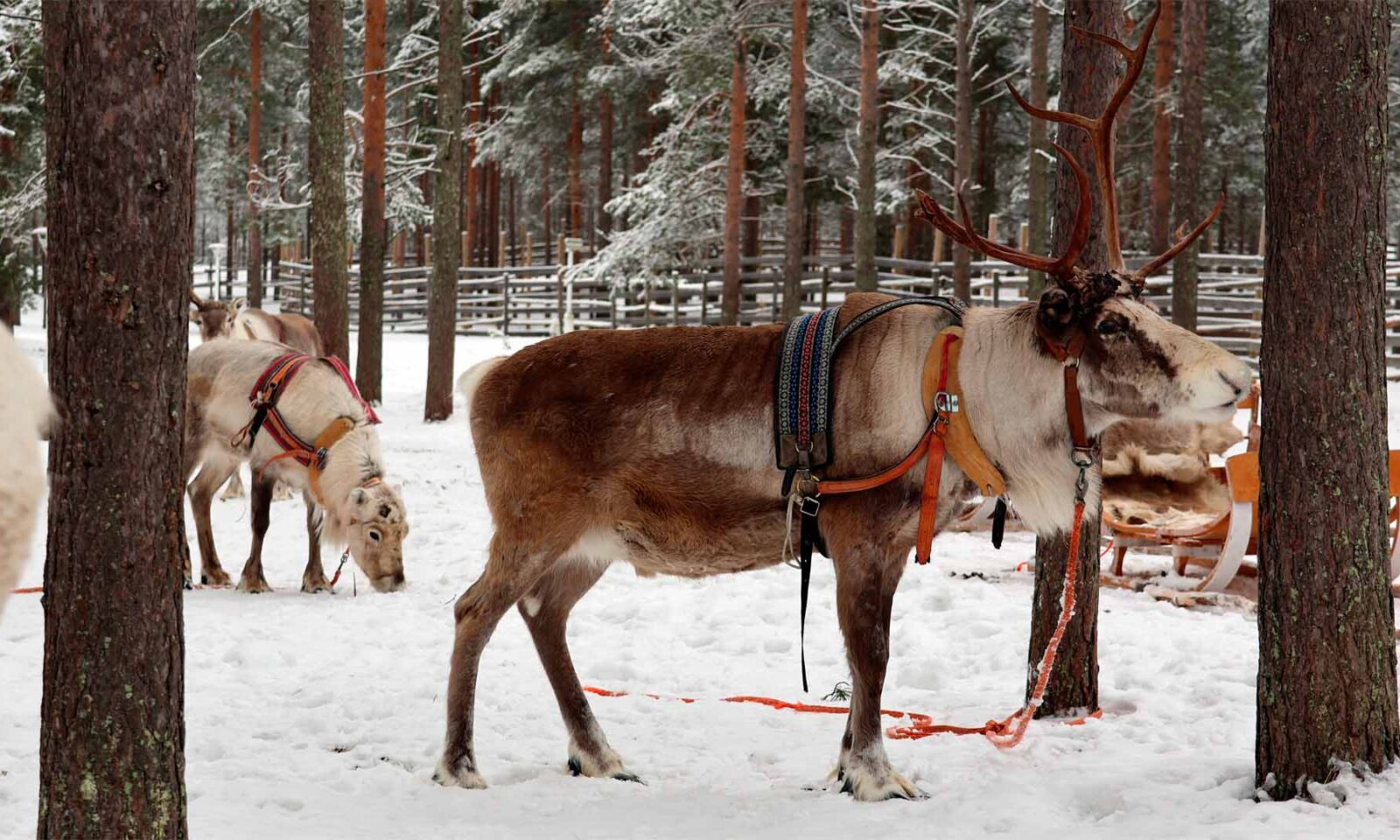
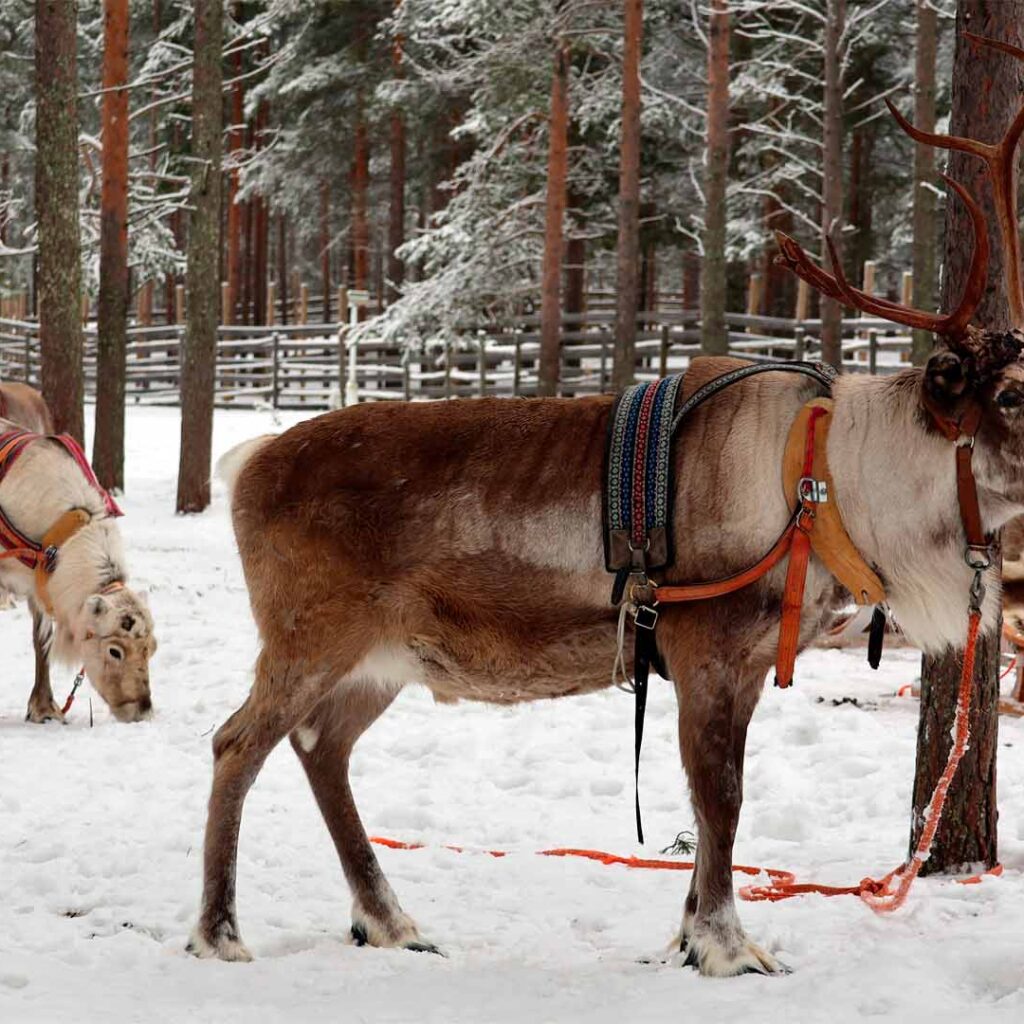
Finland is home to approximately 200,000 reindeer. Reindeer are native to Finland and have roamed the Arctic tundra long before human settlement in the region. They are perfectly adapted to the cold, harsh climate of winter. In Lapland, you’ll find reindeer motifs everywhere as they also hold a special place in livelihood, culture, cuisine, folklore, and Christmas traditions.
In this guide, we explore everything you need to know about reindeer in Finland before your Lapland holiday.
Reindeer and the Sámi
Reindeer herding is not just an occupation; it’s a way of life, particularly for the Sámi people, the indigenous inhabitants of Lapland and the larger Sápmi region. Sápmi includes the northern parts of Fennoscandia, stretching over four countries: Norway, Sweden, Finland, and Russia.
For centuries, the Sámi (the only indigenous peoples in Europe) have practiced sustainable reindeer herding, utilizing every part of the reindeer for travel, livelihoods, food, clothing, and tools.
Life of a Reindeer in Lapland
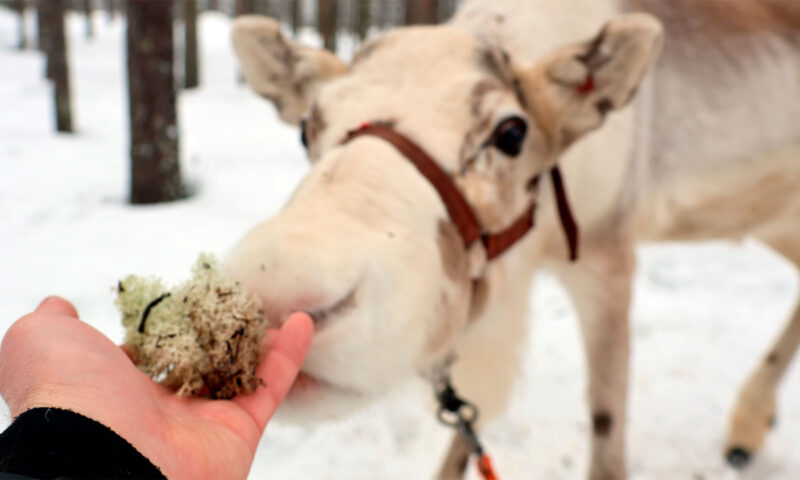
Reindeer in Finnish Lapland live in close harmony with nature, roaming freely across forests, fells, and open tundra. Their movements follow the rhythm of the seasons, shaped by food, weather, and instinct. In winter, they dig through deep snow to reach lichen, their primary source of nourishment, while summer draws them to higher ground where fresh vegetation is plentiful, and insects are fewer.
Perfectly adapted to Arctic life, reindeer have thick winter coats, wide hooves that work like snowshoes, and the ability to conserve energy during the coldest months, allowing them to thrive even as temperatures drop far below freezing.
Fascinating Facts About Reindeer in Lapland
- Both male and female reindeer grow antlers, one of the few deer species to do so.
- Reindeers can see ultraviolet light, helping them spot predators and navigate the snowy landscape.
- Their specialized noses warm icy air before it reaches the lungs, allowing them to thrive in harsh Arctic conditions.
Reindeer are perfectly adapted to the cold, harsh climate of winter.
Reindeer Herding Today: Where Tradition Meets the Modern Arctic
Reindeer in Finland are semi-domesticated, living largely natural lives while being cared for through traditional herding practices that have shaped Lapland for generations. Although wild reindeer disappeared from Finland centuries ago, today’s herds retain strong instincts and seasonal movement patterns.
Reindeer herding remains an important livelihood in the north, combining ancestral knowledge with modern tools such as snowmobiles and GPS tracking. Carefully managed herd sizes, rotating grazing areas, and sustainable practices ensure animal welfare, protect fragile Arctic ecosystems, and preserve a way of life deeply rooted in Lapland’s cultural identity.
Reindeer You May Encounter While Travelling in Lapland
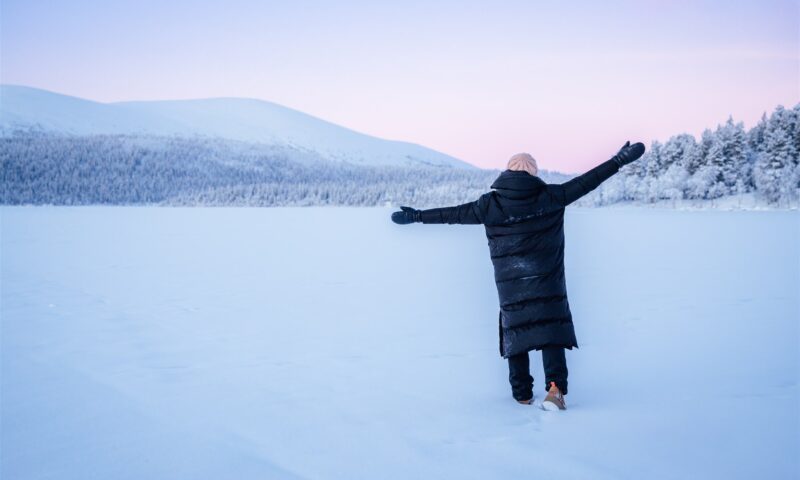
Reindeer herding areas cover the three northernmost provinces of Finland: Lapland, Kainuu, and Northern Ostrobothnia. In these regions, it’s common to see reindeer almost anywhere, even in village centers or along quiet roads. Traveling by car or hiking through the wilderness, you’re likely to spot them roaming freely.
Tips for encountering reindeer in the wild:
- Respect their space: Reindeer are not tame. Even if they allow you to approach, never chase or harass them.
- Don’t feed them human food: Reindeer primarily eat lichen. If you wish to feed or touch reindeer, visit one of Lapland’s many reindeer farms.
- Stay calm: Reindeer are rarely aggressive toward humans. Bulls may be more defensive during the autumn rut, but encounters are generally safe.
- Road etiquette: If you see reindeer on the road, remain calm and give them space. Flash your high beams to alert oncoming vehicles. In case of a collision, call emergency services at 112.
- Keep dogs leashed: Even a small dog can stress reindeer, so always keep pets under control.
Reindeer in Finnish Cuisine
In traditional Lappish tales, reindeer are known as the “livestock of the Sun,” a gift from the Sun itself to sustain people in the harsh Arctic fells.
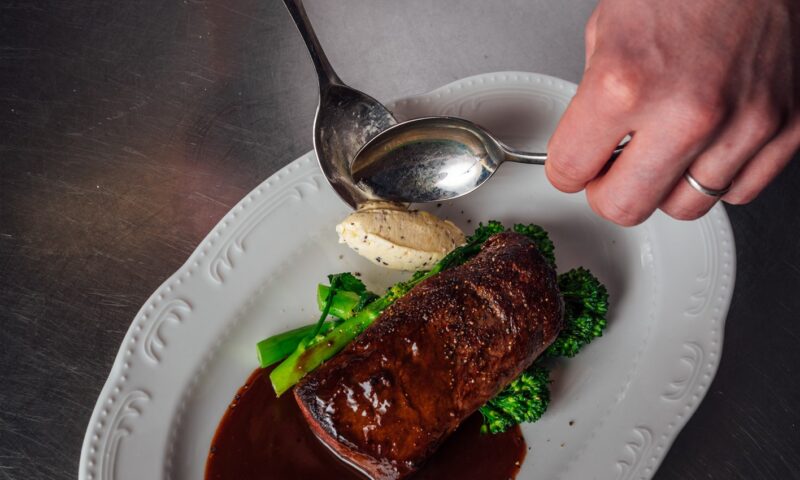
Today, reindeer remains a beloved part of Finnish cuisine. It is traditionally sautéed and served with lingonberries and mashed potatoes, but you can also find it as ribs, pizza toppings, burgers, and even sushi. Naturally tender, reindeer meat cooks quickly, is best enjoyed medium-rare, and is easy for the body to digest.
Experiencing Reindeer in Lapland at Kelo Resort
Reindeer encounters at Kelo are both ethical and unforgettable. Join a guided reindeer safari and meet a skilled herder who can answer all your questions about these remarkable animals, from how they survive temperatures as low as -45°C to the secrets of their seasonal rhythms. You’ll even have the chance to feed the reindeer their favorite treats, creating a truly personal connection with Lapland’s iconic wildlife.
Afterwards, settle into a traditional reindeer sleigh: the most mystical and ancient mode of transportation in Lapland. Each journey is unique, gliding through pristine winter landscapes, offering moments of quiet wonder under the Arctic sky.

Discover Lapland Through Its Reindeer
Reindeer are more than a tourist attraction in Finland; they are a vital part of local culture and the Arctic ecosystem. Whether you join a sleigh ride at Kelo Resort or explore the Sámi traditions of reindeer herding, getting to know these majestic animals brings the wilderness of northern Finland to life. For snow-covered landscapes, quiet forests, and the gentle jingle of sleigh bells, a visit to see the reindeer is the perfect winter adventure.