

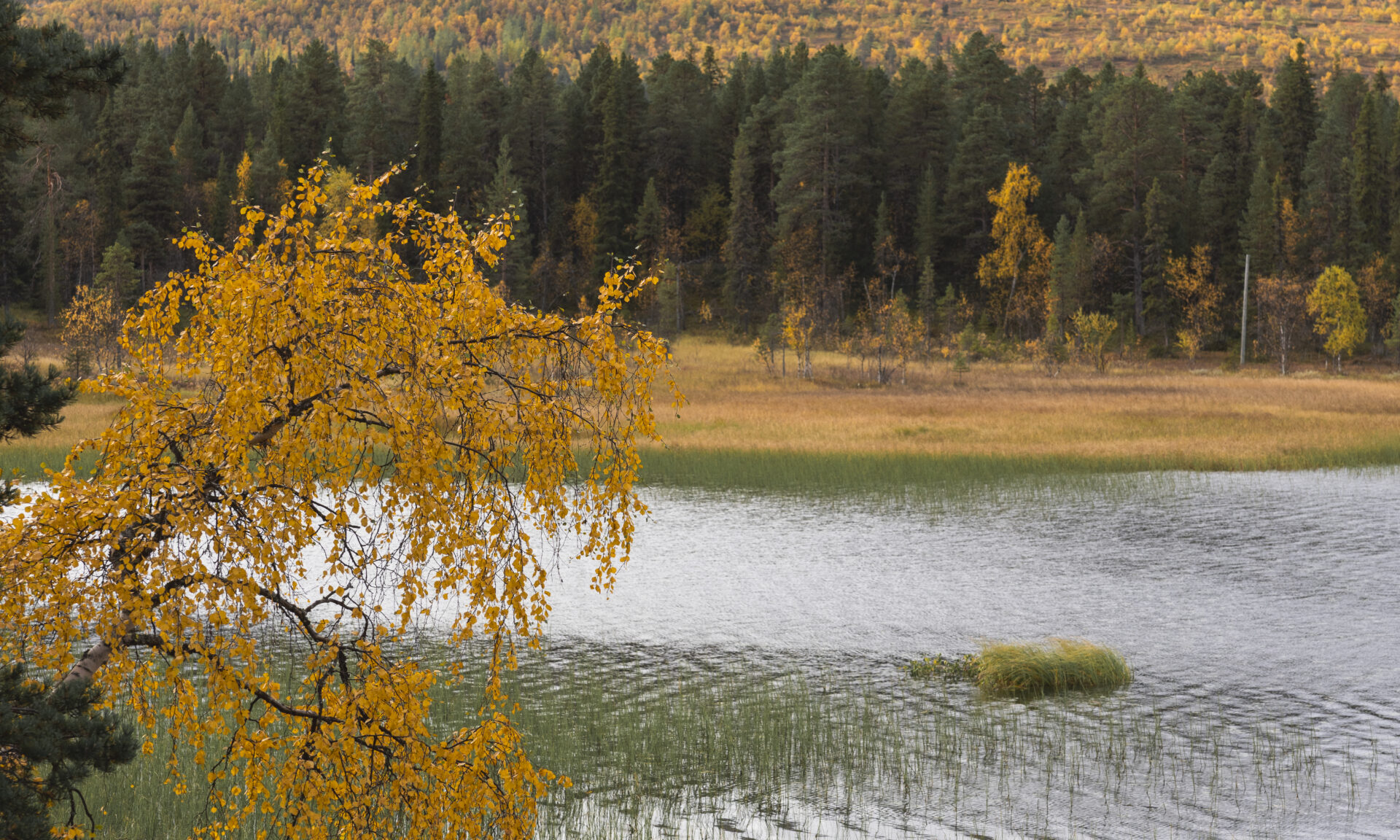

Autumn in Lapland arrives as ruska
Autumn in Lapland is brief, vivid and restless. Finns call the colour season ruska: birch leaves turn yellow, aspens glow gold and orange, and low fell plants spread deep red across the ground. Around Pallas–Yllästunturi, the combination of forest and open fell creates layers of colour that change with every rise in the trail.
When is the best time to see ruska?
Ruska usually reaches northern Lapland around September, often becoming strongest near the middle of the month. Timing varies with latitude, elevation, frost, wind and rainfall, so no exact peak can be promised in advance. Ground ruska may last differently from tree colour, and a storm can strip leaves overnight.
For the best chance, plan several days rather than one photographic deadline. Follow local updates shortly before travel and accept that green, gold, red, mist and even fresh snow can all belong to an authentic autumn trip.
Why Lapland’s autumn colours are different
The spectacle is not limited to trees. Bilberry, dwarf birch, alpine bearberry and other low vegetation colour the fells and forest floor. The air becomes crisp, nights darken enough for stars and possible aurora, and the first frost sharpens the landscape. Wild berries and mushrooms connect the season to local food.
What to do during ruska
Hiking is the classic choice. Short day trails reveal forest colour, while higher routes open views across the fells. Cycling, photography and berry picking also suit the season. Start early on popular days, stay on durable routes and keep distance from wildlife and reindeer-herding work.
After a cool outing, sauna and a seasonal dinner complete the rhythm. Kelo Resort provides a quiet base near the national park; explore activities in Lapland and ask what is available during the autumn opening period.
What to wear and pack
Expect rapid changes. Use a moisture-managing base, fleece or wool mid-layer and waterproof shell. Bring a warm hat, thin gloves, waterproof hiking footwear, a head torch and dry spare socks. Frost is possible, daylight shortens quickly and high ground can feel much colder than a sheltered car park.
Responsible ruska travel
The colour season is popular, but the ground remains fragile. Park only in designated places, carry out all rubbish and use existing toilets and fireplaces. Do not pick protected plants, break branches or take lichen and moss. Keep dogs controlled according to local rules and check national-park instructions before setting out.
Is ruska worth planning a trip around?
Yes – provided you plan for a season, not a single perfect day. Autumn in Lapland combines cool air, darkening nights and an extraordinary transition across forest and fell. Even when the colours are early, late or softened by rain, the landscape is preparing visibly for winter. That change is the real essence of ruska.