

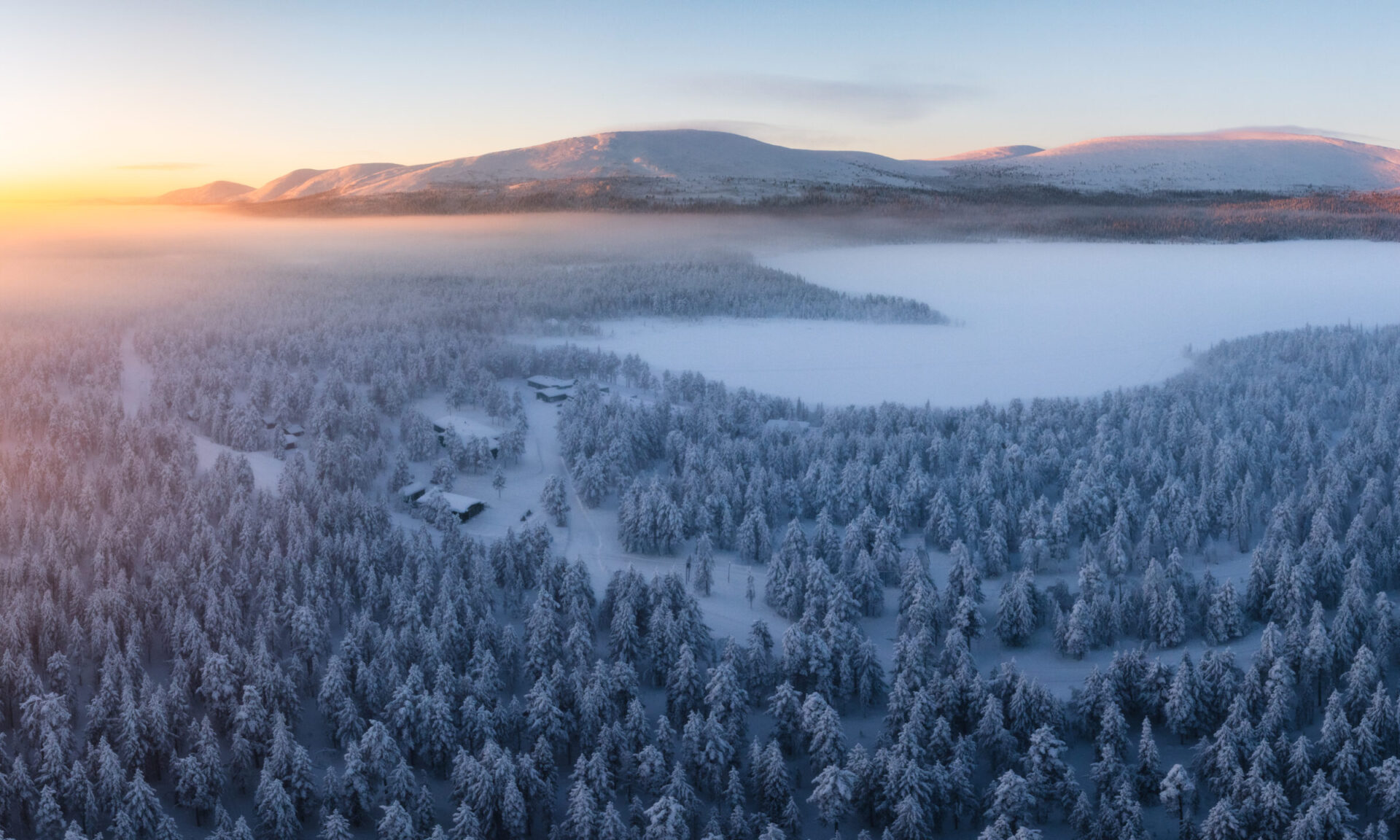

Lapland weather by month: first understand the scale
Lapland covers a vast area, so weather in Rovaniemi, Kilpisjärvi and the Pallas fells is not identical. Kelo Resort lies in Fell Lapland near Pallas–Yllästunturi National Park, where elevation, open fells and continental air can create colder and windier conditions than a city forecast suggests. The figures below are planning ranges, not promises. Arctic weather varies from year to year and can move far outside the average.
| Month | Typical planning range | Seasonal character |
|---|---|---|
| January | about -25 to -8°C | Deep winter, short blue twilight, dry snow |
| February | about -22 to -6°C | More daylight, reliable winter conditions |
| March | about -18 to -2°C | Bright snow, longer days, cold nights |
| April | about -10 to +5°C | Spring skiing, strong sun, freezing nights |
| May | about -3 to +12°C | Snowmelt and rapid seasonal change |
| June | about +5 to +18°C | Midnight-sun season, cool or mild days |
| July | about +8 to +22°C | Warmest month, showers and insects possible |
| August | about +5 to +18°C | Darker nights return, berry season |
| September | about 0 to +12°C | Ruska colours and first frosts |
| October | about -8 to +6°C | Transition to winter, variable snow cover |
| November | about -15 to 0°C | Darkening days, early-winter conditions |
| December | about -22 to -5°C | Polar-night atmosphere and deepening snow |
These broad daytime and night-time ranges are deliberately practical. A single cold spell can bring temperatures below -30°C, while a mild winter day may rise close to freezing. Always use the Finnish Meteorological Institute’s local forecast and warnings for real decisions.
Average temperature is not the temperature you will experience
A monthly average smooths together warm afternoons, bitter nights and short-lived extremes. It is useful for comparing seasons but poor for deciding tomorrow’s clothing. Look at the forecast minimum and maximum, hourly wind, precipitation, cloud, warnings and the “feels like” value. Check again on the morning of an activity.
The location matters too. A sheltered forest trail, open frozen lake and exposed fell can feel different within a few kilometres. Cold air may collect in valleys, while wind dominates on higher ground. Ask a local guide about the exact route rather than applying a town forecast mechanically.
Wind chill, moisture and the way cold feels
Wind removes the thin layer of warm air around the body, increasing the risk of cold injury on exposed skin. This is why a windproof outer layer and face protection matter even when the thermometer looks manageable. “Feels like” readings are estimates for exposed conditions, not a new measured air temperature, but they are useful for planning.
Moisture changes comfort just as strongly. Around 0°C, wet snow can soak gloves and footwear and feel more chilling than dry, colder air. During exercise, sweat trapped in cotton cools the body at rest. In deep dry frost, breathing air may feel sharp and batteries drain quickly, but well-managed layers can remain comfortable.
Snow cover and ice are separate from air temperature
One cold day does not create safe lake ice, and a mild afternoon does not immediately remove a deep snowpack. Snow depth and ice strength reflect the whole season, local water movement, wind and recent weather. Never infer natural-ice safety from a monthly guide, a photograph or other people’s footprints.
Permanent snow usually arrives earlier in northern and elevated Lapland than in the south, but the start and end dates vary each year. October and November are especially uncertain, while spring snow may remain on fells after low ground has opened. Activity providers decide season dates from actual conditions.
Daylight changes as dramatically as temperature
Winter planning is also light planning. Around midwinter, outdoor photography and road travel have a short natural-light window, even though blue twilight extends the useful day. By March, long daylight and reflective snow change both the mood and the need for eye and skin protection. In summer, continuous or near-continuous daylight can disrupt sleep; an eye mask and regular bedtime help.
Cloud can make a short winter day feel darker, while clear snow and moonlight make night surprisingly luminous. Check sunrise, sunset and civil-twilight times for the exact destination, not for Finland as a whole.
How climate trends affect a month-by-month guide
Finland’s official 1991–2020 climate normal is warmer than the preceding 1981–2010 period, with the largest changes in winter. A climate normal describes a 30-year reference, not a guarantee for any individual trip. Warming also does not remove the possibility of severe cold spells.
For travellers, the practical response is flexibility: choose cancellable or adjustable activities when possible, pack for a range and use current official forecasts. Articles and historical averages are background; operational advice must come from the latest local conditions.
January: deep winter and blue light
January is one of the coldest months. In northern Fell Lapland, the sun may remain below the horizon for part of the month, but the day is not pitch black: snow reflects a long blue and pink twilight. Expect compact daylight windows, dry powder snow and occasional severe cold. Plan outdoor activities around warm breaks and dress for standing still as well as movement.
February: winter with growing daylight
February remains very cold, yet the returning sun changes the rhythm quickly. Snow conditions are usually well established, and the longer days suit skiing, snowshoeing and reindeer experiences. Clear nights can be bitterly cold, so aurora clothing should be warmer than daytime activity clothing.
March: bright Arctic spring
March combines deep snow with long, increasingly bright days. Daytime sun can feel surprisingly warm, while the temperature drops sharply after sunset. Sunglasses and sunscreen become important on reflective snow. This is an excellent month for active winter travel, provided you keep a warm layer for stops.
April: spring snow and freeze-thaw cycles
April often offers firm morning snow, mild afternoons and cold nights. Spring skiing can be superb, but paths and roads may become slushy during the day and icy again after sunset. The exact end of winter activities depends on snow and ice conditions, not the calendar alone.
May: the landscape changes fast
May is a shoulder month. Snow retreats unevenly, meltwater rises and some summer trails remain wet, snowy or fragile. Warm sunshine and night frost can occur within the same trip. Check local route conditions and avoid damaging soft ground.
June: nightless nights
June brings very long days and, in the far north, a period when the sun does not set. Temperatures can be pleasant, but cold rain and near-freezing nights are still possible. Pack a light insulated layer, waterproof shell and insect protection.
July: the warmest month
July is generally the warmest month, though “Arctic summer” can mean anything from cool rain to days above 20°C. Hikers should prepare for sun, wind and showers. Mosquito numbers vary by place and weather; head nets and repellent make calm, damp areas more comfortable.
August: berries and darker nights
August often begins like summer and ends with an autumn edge. Wild berries ripen, nights darken and the first aurora may become visible under clear skies. Day hikers need rain protection and a warm layer because temperatures can drop quickly after sunset.
September: ruska and first frosts
September is famous for ruska, the short burst of red, orange and gold across forests and fell vegetation. Frost is common, and the first snow may dust higher ground. Popular trails and accommodation can be busy during peak colour, so book early and prepare for both autumn rain and wintry showers.
October: a true transition month
October is difficult to generalise. The landscape may be bare and frozen, snowy for a few days or already settling into winter. Daylight shortens quickly, surfaces are slippery and many seasonal services pause. Flexible plans are valuable.
November: early winter and increasing darkness
November usually brings sustained frost and growing snow cover, but conditions vary. Lakes and rivers may look frozen before the ice is safe. Never judge natural ice by appearance; use maintained routes and local guidance. Reflective clothing and a head torch are useful.
December: polar-night atmosphere
December offers long darkness, snow-muted landscapes and extended twilight colours. In the northernmost parts of Lapland the sun does not rise for weeks; farther south, daylight is still very short. Cloud cover, snowfall and temperature can change plans, so build some flexibility into a holiday schedule.
When is the best month to visit Lapland?
Choose by experience rather than by a single temperature. December and January offer deep winter darkness; February and March bring more light with reliable snow; April is ideal for spring-winter activities; June and July belong to the midnight sun; August suits berries and the return of dark nights; September brings ruska. Whatever the month, check current conditions shortly before travelling and ask Kelo Resort about seasonal activities and access.
Frequently asked questions about Lapland weather
Does Lapland always have snow in December?
Snow is usually established in northern Fell Lapland by December, but depth and quality vary and no future date is guaranteed. Check the destination’s current conditions rather than relying on a regional image.
What is the coldest month in Lapland?
January and February are generally the coldest period, but the lowest temperature of a particular winter can occur outside the statistically coldest month.
Can temperatures fall below -30°C?
Yes. Severe cold spells are possible in inland Lapland. They are not the temperature of every winter day, but travel plans and clothing should allow for them.
Is summer warm enough for hiking?
Often yes, but summer can include cold rain, wind and near-freezing nights. Carry rain protection and insulation even when the daytime forecast is mild.
When can I see the Northern Lights?
Darkness is required, so the practical viewing season runs from late summer into spring. Clear sky and auroral activity must coincide, and no month guarantees a display.