

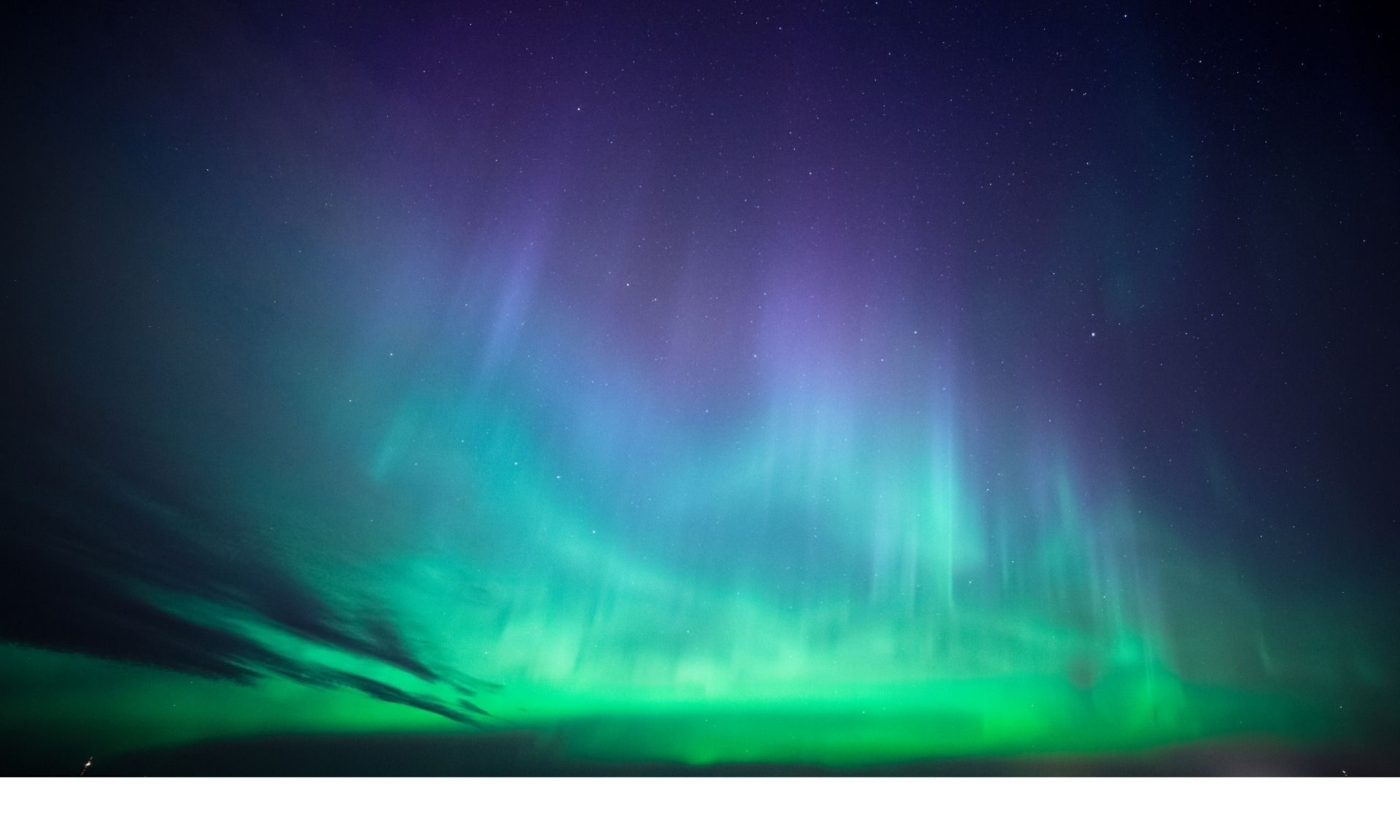

Few natural spectacles rival the northern lights. Curtains of green, violet, and crimson rippling across a dark sky have drawn travelers to the Arctic for centuries. Yet one of the most common questions from first-time aurora chasers is surprisingly practical: how long do northern lights last? The answer, like the lights themselves, is never quite the same twice.
The Short Answer: How Long Do Northern Lights Last?
A single aurora display can last anywhere from a few minutes to several hours. The most intense phase of an auroral substorm typically lasts between 15 and 30 minutes, though the full substorm cycle can continue for one to three hours.
However, on a night with strong geomagnetic conditions, multiple substorms can follow one another in quick succession, meaning the sky may stay alive with color for two, three, or even six hours at a stretch.
Understanding northern lights duration helps you plan your trip and set realistic expectations before heading north.
What Controls Northern Lights Duration?
The aurora borealis is created when charged particles from the sun collide with gases in Earth’s upper atmosphere. The intensity and longevity of the display depend on several interlocking factors.
Solar wind strength is the primary driver. When the sun fires off a coronal mass ejection (CME) — a large burst of magnetized plasma — it can trigger prolonged geomagnetic storms that keep auroras active for hours or even across multiple nights. During quieter periods, the aurora may flicker briefly and then vanish.
The Kp index is the global measure of geomagnetic activity, running on a scale from 0 to 9. A Kp of 1 or 2 might produce a faint, short-lived glow near the horizon visible only from high latitudes. A Kp of 5 or above signals a geomagnetic storm, which can sustain vivid, widespread displays for many hours and push the aurora visible zone far southward.
Your latitude also matters. Travelers in the auroral zone — northern Norway, Iceland, Finnish Lapland, northern Canada, and Alaska — sit directly beneath the auroral oval and stand the best chance of seeing displays that last the longest. Further south, windows of visibility are shorter and less predictable.
How Long Does Aurora Borealis Last on a Typical Night?
This is one of the most searched questions among aurora tourists, and for good reason. How long does aurora borealis last depends heavily on solar activity on any given night. During moderate conditions, expect one or two bursts of color lasting 20 to 45 minutes each, with calm intervals in between.
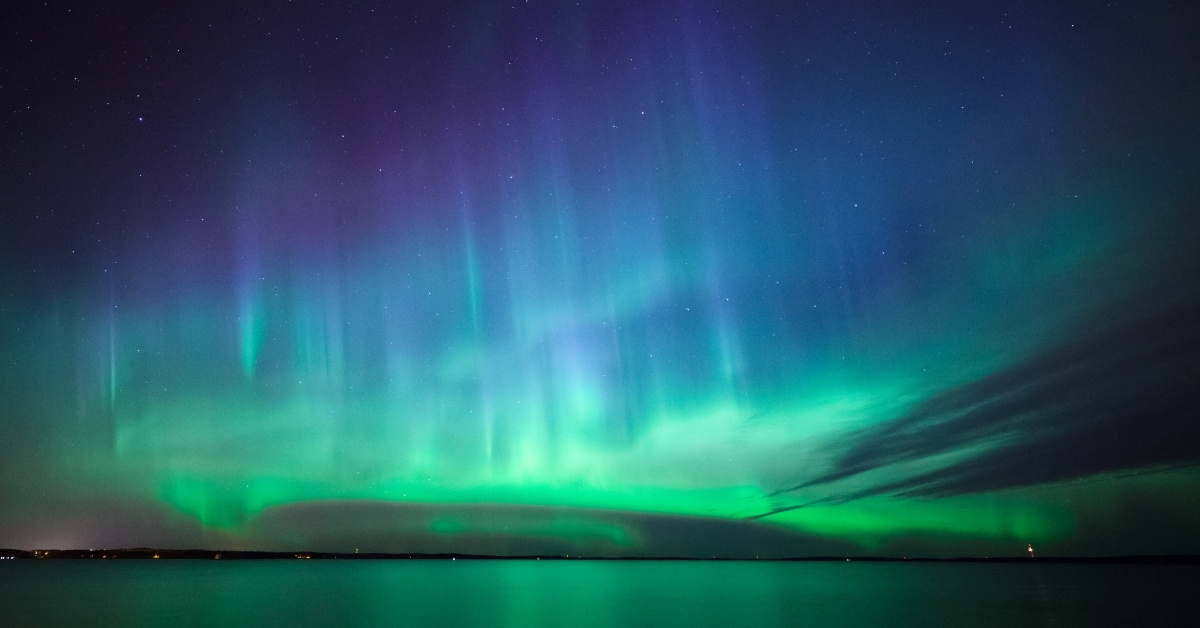
During a strong geomagnetic storm, the aurora borealis can last continuously for several hours, with curtains and rays shifting shape and color throughout the night.
On exceptional nights, aurora watchers have reported near-continuous activity lasting four to six hours or longer. These marathon displays are relatively rare, but they do happen — particularly around the equinoxes in March and September, when Earth’s magnetic field orientation is especially favorable for capturing solar wind energy.
Does the Aurora Last Multiple Nights?
Yes. A powerful geomagnetic storm triggered by a CME can produce auroras across two, three, or even four consecutive nights as Earth moves through the trailing wake of the solar disturbance.
The most intense activity usually occurs on the first night after the CME arrives, with subsequent nights gradually diminishing in strength — though surprises are common.
How Long Do Northern Lights Last? Best Conditions for an Extended Show
To maximize your chances of witnessing a long aurora display, aim for:
- High solar activity — solar Cycle 25 reached its maximum around late 2024, and aurora activity remains elevated as the cycle gradually winds down through the late 2020s.
- Clear, dark skies — cloud cover is the aurora chaser’s greatest enemy. Destinations like northern Finland and Norway have dedicated aurora forecasting services combining sky clarity and Kp predictions.
- New moon phase — moonlight can wash out fainter displays. A dark moon window dramatically improves the visibility of subtle aurora structure.
- Patience and warmth — temperatures in the auroral zone regularly fall below −20°C. Dress in proper layered Arctic gear so you can stay outside long enough to catch the full show.
Tips for Timing Your Watch
Aurora activity often peaks around local magnetic midnight, which roughly corresponds to 11 p.m. to 2 a.m. in most aurora destinations. Apps and websites that track real-time Kp data, such as Space Weather Live can alert you when activity spikes, so you are not standing in the cold for hours on end unnecessarily.
Set alerts for Kp 3 or above if you are in the heart of the auroral zone, or Kp 5 and above if you are watching from further south.
The Unpredictability Is Part of the Magic
Ultimately, no forecast can guarantee exactly how long the northern lights will last on any given night. The aurora operates on cosmic timescales, shaped by a star 150 million kilometers away.
Some travelers wait a full week and are rewarded with a 30-second flicker. Others step outside on their very first evening and watch the sky dance for four unbroken hours.
That unpredictability is precisely what makes witnessing a long, vivid aurora borealis display feel like a genuine gift — one worth traveling a long way north to receive.
You might also be interested in following articles: